
Beyond the Standard Protocol: Adapting Return-to-Play Rehabilitation for Athletes with Autism Spectrum Disorder
Written by: Nikhil Patel, MD
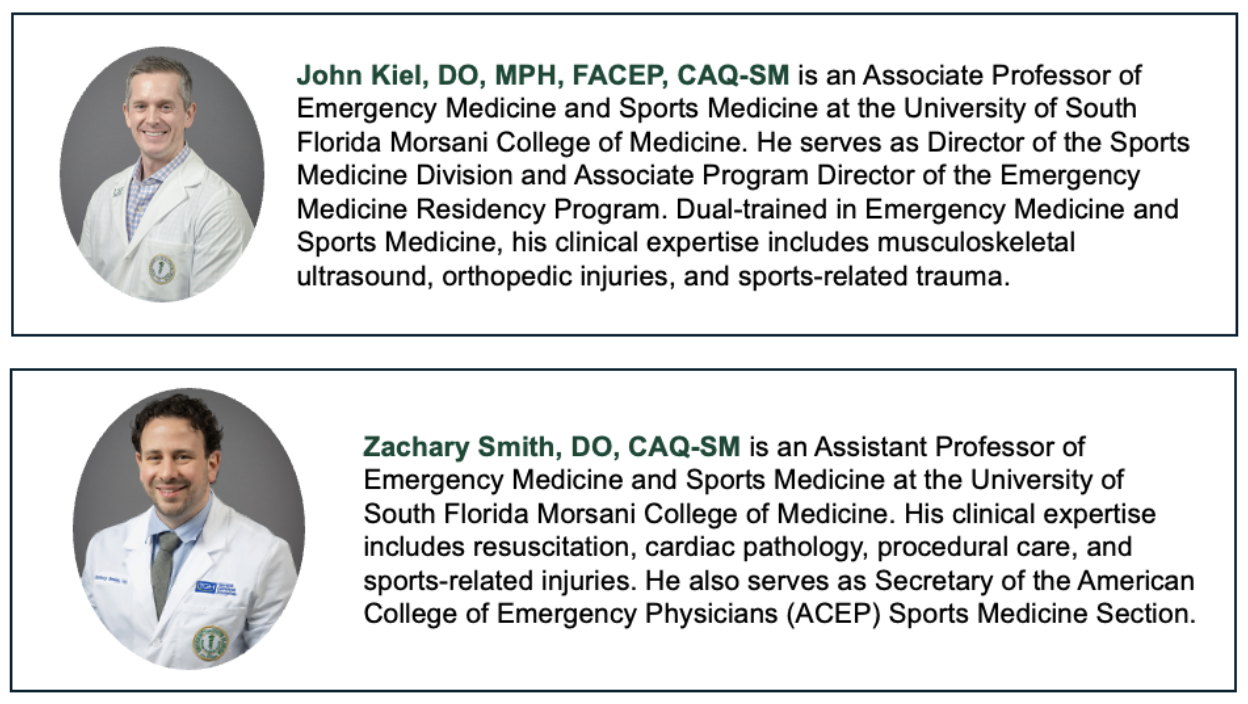
Edited by: John Kiel, DO, MPH, FACEP, CAQ-SM; Zachary Smith, DO, CAQ-SM
Beyond the Standard Protocol: Adapting Return-to-Play Rehabilitation for Athletes with Autism Spectrum Disorder
Recovering from an “Unhappy Triad” requires more than just physical rehabilitation. For athletes with autism spectrum disorder (ASD), return to play depends on communication, sensory accommodations, and structured routines.
An “unhappy triad” is a complex knee injury involving the anterior cruciate ligament (ACL), medial collateral ligament (MCL), and medial meniscus. Often due to rotational forces or valgus stress during athletic activity, this injury may require surgical intervention followed by months of progressive rehabilitation. Traditionally, return-to-play protocols emphasize restoring range of motion, rebuilding muscle strength, and gradually reintroducing sport-specific movements [1].
However, for athletes with autism spectrum disorder (ASD), the rehabilitation process may present additional challenges [2]. Differences in sensory processing, communication, pain expression, and tolerance for routine changes can affect their participation in physical therapy and recovery. The orthopaedic clinical goals for return to play remain the same, but the delivery may require individualized adaptation.
Phase 1: Postoperative Recovery and Immobilization
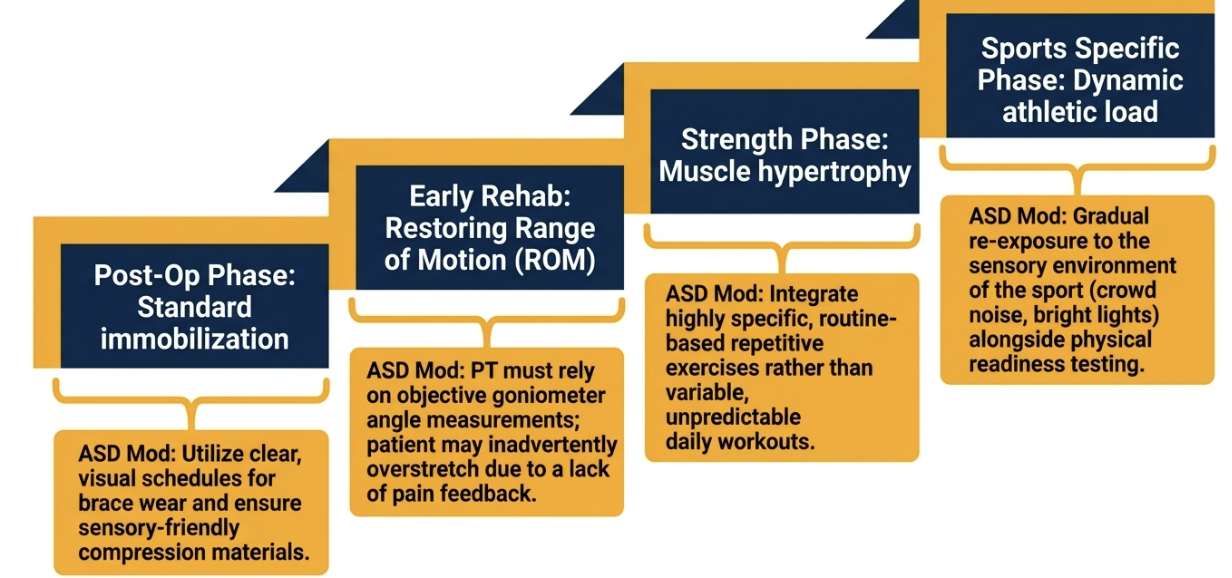
Initially, post-operative phases focus on protecting repaired structures, minimizing swelling, and following prescribed immobilization or weight-bearing restrictions. Depending on the procedure, patients may need a knee brace, crutches, and/or activity limitations. However, brace pressure, the texture of compression materials, or sudden mobility limitations may be particularly challenging for those with sensory sensitivities [2].
ASD-specific modification: By working with the patient to develop clear schedules that outline when a brace must be worn, when exercises should occur, and what activities are permitted can help establish predictability and, overall, meaningful recovery. When clinically appropriate, choosing sensory-friendly compression materials and gradually introducing patients to necessary equipment may improve comfort and adherence[3].
Phase 2: Early Rehabilitation and Restoration of Range of Motion
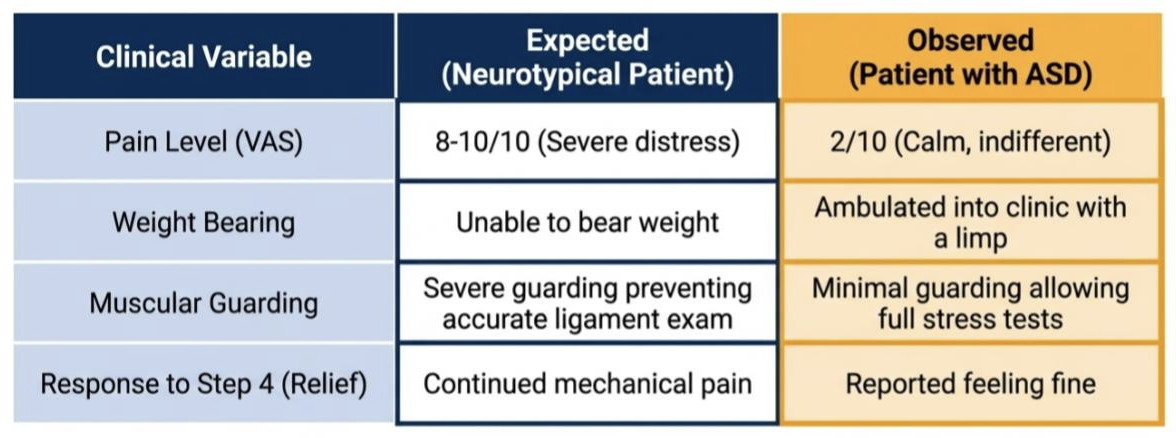
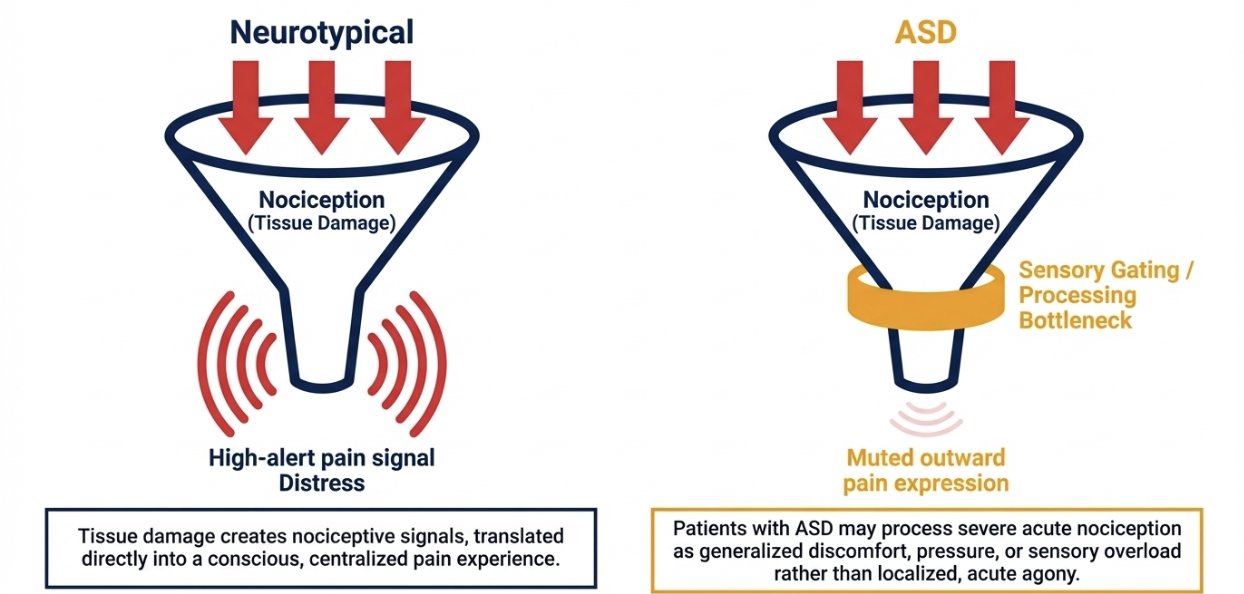
As time progresses, recovery shifts toward restoring range of motion, reducing stiffness, and gradually improving mobility. Physical therapists traditionally use patient-reported pain and physical examination findings to guide progression. However, some individuals with ASD may experience or communicate pain differently, making this subjective discomfort an unreliable indicator for exercise tolerance [4].
ASD-specific modification: Physical therapists should consider objective goniometric measurements to monitor improvements in knee flexion and extension rather than verbal feedback. Clinicians should also assess swelling, guarding, movement quality, and other signs of discomfort. Alternative pain scales, visual communication tools, and caregiver input may prevent clinicians from pushing patients beyond their limits while ensuring measurable progress continues.
Phase 3: Strengthening and Muscle Hypertrophy
Upon reaching adequate mobility and healing, rehabilitation primarily focuses on rebuilding quadriceps and hamstring strength, improving neuromuscular control, and restoring overall functionality.
Thus, traditional strength training uses a range of exercises and progressive routines. Although it may be beneficial, these frequent unexpected changes may be distressing for individuals with ASD –who prefer consistency and predictability [3].
ASD-specific modification: Integrating a highly specific, repetitive, and routine-based exercise regimen could help create a structured environment for ASD patients. Through consistent activity, clearly demonstrated exercises, and gradual regimen changes, the patient’s participation may increase while reducing overall anxiety [3]. The goal is not to limit rehabilitation intensity, but rather deliver the same strengthening principles via a predictable, individualized approach for ASD patients [5].
Phase 4: Sport-Specific Training and Return to Play
The final phase focuses on restoring dynamic movements for athletic participation, including cutting, jumping, pivoting, landing, and rapid changes in direction.
For athletes with ASD, a competitive environment presents sensory demands that are not present in a physical therapy setting. Crowds, bright lights, unpredictable movements, and auditory stimulation create additional challenges to consider when developing a therapy regimen for athletes [2].
ASD-specific modification: Consider gradually re-exposing the athlete to the sensory environmental demands of their sport alongside the physical readiness testing. Rehabilitation usually occurs in a quiet, controlled setting. However, consider progressing to increasingly realistic practice environments using teammates, background noise, and other sport-specific stimuli.
This complementary, graded approach lets athletes rebuild confidence and familiarity while clinicians assess strength symmetry, functional performance, knee stability, and psychological readiness [5].
Conclusion
The overall principle of an ASD-adapted return-to-play protocol is that the orthopaedic milestones remain consistent, but the strategies used to achieve them may need to differ.
Successful rehabilitation requires collaboration among physicians, physical therapists, athletic trainers, patients, and caregivers. By recognizing individual communication preferences, sensory limitations, and behavioral needs, clinicians should develop holistic treatment plans that promote physical and emotional recovery.
Though these proposed modifications could be beneficial for athletes with ASD to promote their rehabilitation, further research is needed to determine how specific accommodations may affect rehabilitation adherence, functional outcomes, and safe return to competition. Ultimately, the goal is not simply to return an athlete to the field, but to ensure that every athlete has an equitable opportunity to recover safely, confidently, and successfully.
About Our Expert Reviewers:
References
Kompel, A., Haran, P. H., Murakami, A. M., Engebretsen, L., Jarraya, M., Roemer, F., & Guermazi, A. (2021, March 8). OAJSM: Dove Medical Press. Open Access Journal of Sports Medicine.
Ben-Sasson A, Gal E, Fluss R, Katz-Zetler N, Cermak SA. Update of a Meta-analysis of Sensory Symptoms in ASD: A New Decade of Research. J Autism Dev Disord. 2019;49(12):4974-4996. doi:10.1007/s10803-019-04180-0
Rutherford M, Baxter J, Grayson Z, Johnston L, O'Hare A. Visual supports at home and in the community for individuals with autism spectrum disorders: A scoping review. Autism. 2020;24(2):447-469. doi:10.1177/1362361319871756
Kumar J, Hartzell C, Abelson E, Mano KJ, Chidambaran V. Prevalence, Expression, Assessment, Mechanisms, and Management of Pain in Autistic Children: A Scoping Review A&A Practice. 2026;20(4):e02178. doi:10.1213/XAA.0000000000002178
Liang Z, Hoshino Y, Moatshe G, et al. APKASS 2024 consensus statement on anterior cruciate ligament reconstruction, part Ⅲ: Return to play after anterior cruciate ligament reconstruction. Asia Pac J Sports Med Arthrosc Rehabil Technol. 2026;45:1-7. Published 2026 May 18. doi:10.1016/j.asmart.2026.05.006
How To Cite Post:
Patel, Nikhil. [11/16/26] Beyond the Standard Protocol: Adapting Return-to-Play Rehabilitation for Athletes with Autism Spectrum Disorder. USF Emergency Medicine Blog. Expert Commentary by J. Kiel and Z. Smith. (https://recorder-shark-zg7w.squarespace.com/blog/beyond-the-standard-protocol-adapting-return-to-play-rehabilitation-for-athletes-with-autism-spectrum-disorder)